

























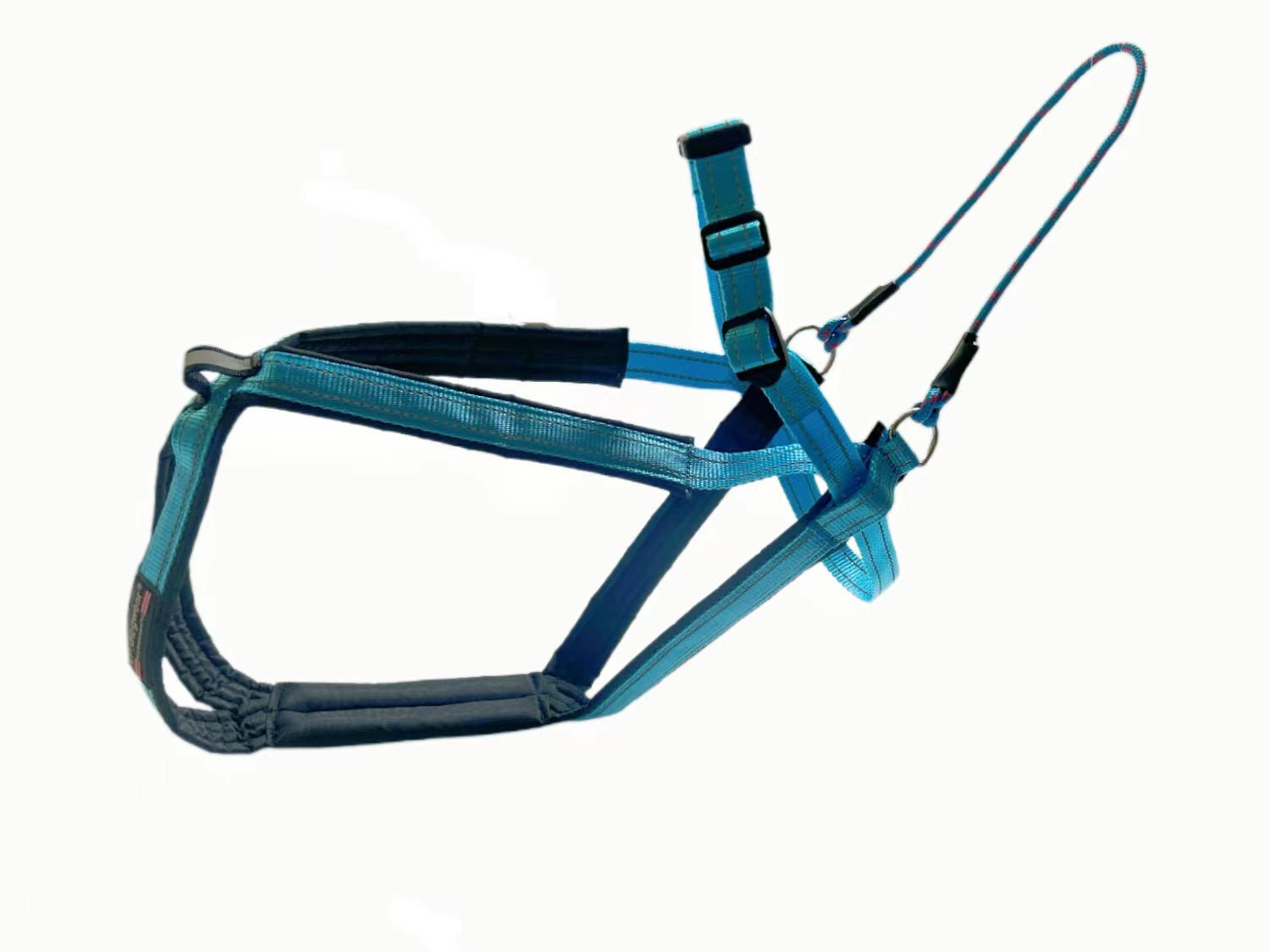


FITTING AND PACKING YOUR PACK
Whether you are hoping to simply give your dog a pack with a few bits of gear to come along on a hike – or take on increasingly difficult challenges earning titles and awards on long-distance wilderness hikes – how you fit your pack is extremely important.
This is something you will master over time, but having a basic understanding of how to fit your pack right from the start is key. I've known a number of people who began backpacking with very fit dogs who told me their dog didn't really seem to enjoy it – and more often than not it was a pack that was either the wrong size or not placed correctly. An inch difference in position on the shoulders can make all the difference between a dog that can happily carry 20–30% of their body weight for ten miles or more, and a dog that is lagging behind looking miserable after just three miles.
If you find that your dog is lagging at a distance you know they are capable of, I highly recommend stopping for a break, taking the pack fully off, and checking the points listed below before going on. Unless your dog has an injury or you have started them on too high a weight, you should have a dog that's happy to carry the pack.
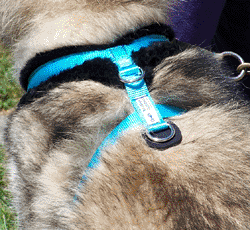
The main thing to be aware of is that the pack should be fitted across the shoulders – not on the back. The top of the pack should sit just below the neck (not riding up into the neck) but not too low on the shoulders either (see photo below).

Put the pack on and let your dog move around. You can generally see a big change in their lightness of movement when it is positioned correctly. A dog wearing a pack that is too low or too high will often drop their head and walk at a more laboured pace.
There are many resources that will guide you on the basics of fitting your dog to a pack – and since all packs are a little different, looking at the manufacturer's guidance or checking with your retailer (such as Snowpaw Store) will give you all the information you need. What I'd like to provide here is the 'pack on the go' information: what to look for when you set out – ideally on some trial hikes – to know you are getting the best out of your pack, along with some troubleshooting tips if your dog seems to be losing interest in backpacking hikes.
Fit First
Obviously you want the pack to be the right fit, and as mentioned above that will vary from pack to pack. Here are a few things to take into account.
Firstly, don't assume the size. If your dog generally takes a certain size in other gear, don't assume that will be the same for a pack. My first Malamute is a smaller girl (approx. 29 kilos) and when I bought our very first pack (a traditional Wenaha pack), everyone said to get a Large as she was a Malamute. As it turned out – several years later when I knew her and backpacking much better – she was actually a Small. In fact, only my largest boy with the longest back wears a Large. The smaller fit changed everything about how much she enjoyed backpacking. There is also a huge variation between pack brands; the same dog is a Medium in the Ruffwear range. So do lots of measurements and, if possible, try on in person, because every dog will be different.
You want a comfortably snug fit but not tight at any point. Fitting a full, heavy pack is always tricky, so try this a lot when there's no weight in it (filling with towels works great) to see how it will sit. Try the dog sitting, standing, and moving around – make sure the straps are a comfortable fit in all positions, especially the belly strap, as you can tighten this to a point that seems to steady the pack but actually makes it difficult for the dog to sit down. You will notice any discomfort points when you do this, and if the pack can't pass all of these checks, you either have the wrong size or the wrong pack.
It's also a good idea to put some hand weights in to see how the panniers sit when loaded (if trying on a dog over a year old). Weight changes how the pack sits considerably – if the panniers sag too low or bounce off the dog's elbows or stomach, that is uncomfortable and distracting. You want panniers that aren't too big but can carry the weight you need, sitting comfortably across the shoulders. The length of your dog's back will affect the pannier size you want. This is exactly why my first Malamute, Memphis, suited the Small so much more than the Large (see photos below – the image on the left shows a Large carrying 10% of her body weight, and the image on the right shows a Small carrying 30%).


It's also why she did her best miles in the Ruffwear Approach, which has very compact, well-positioned panniers suited to smaller legs and shoulders. These sit perfectly on my more compact dogs and I've been able to easily load them to 20% of body weight.
Coat Counts
Don't forget to take your dog's coat into account when sizing. A heavily coated dog will have more natural padding, but the fit still needs to be firm on the shoulders with nothing sagging or loose. If you have a double-coated breed that loses a lot of coat seasonally, the size they wear will be very different in and out of coat – so keep that in mind when purchasing so the size you buy can accommodate any change. It's also worth noting that a dog with a thick coat is going to feel the rub of the pack over miles much more when they are out of coat, so a little extra padding under the pack may be called for at those times.
How You Pack It
The way you pack the panniers will have a huge effect on how your dog carries the pack – little changes can make a big difference. It is absolutely vital that you keep the panniers balanced, especially when starting out, but also as you go along. If you are using items from the packs as you go (such as water, food, or treats), every little thing you take out will change the balance, so take time to consider placement before you leave.
For instance, I use Nalgene water bottles in my dogs' packs for both my water and theirs, and I pack equal water on each side. Because each bottle has measurements on the side, I can be certain I've removed an equal amount from each side at every stop – and this makes a huge difference. In the pictures below you can see a dog walking with a perfectly balanced pack (right) and one that has become slightly unbalanced on route (left).


(Note – I stopped and adjusted the one on the left soon after this shot.)
I also recommend getting a hand luggage weight gauge. You'll need one if you are doing titles, but even if you aren't, you can weigh each pannier before you leave to make sure they are perfectly balanced.
Surface
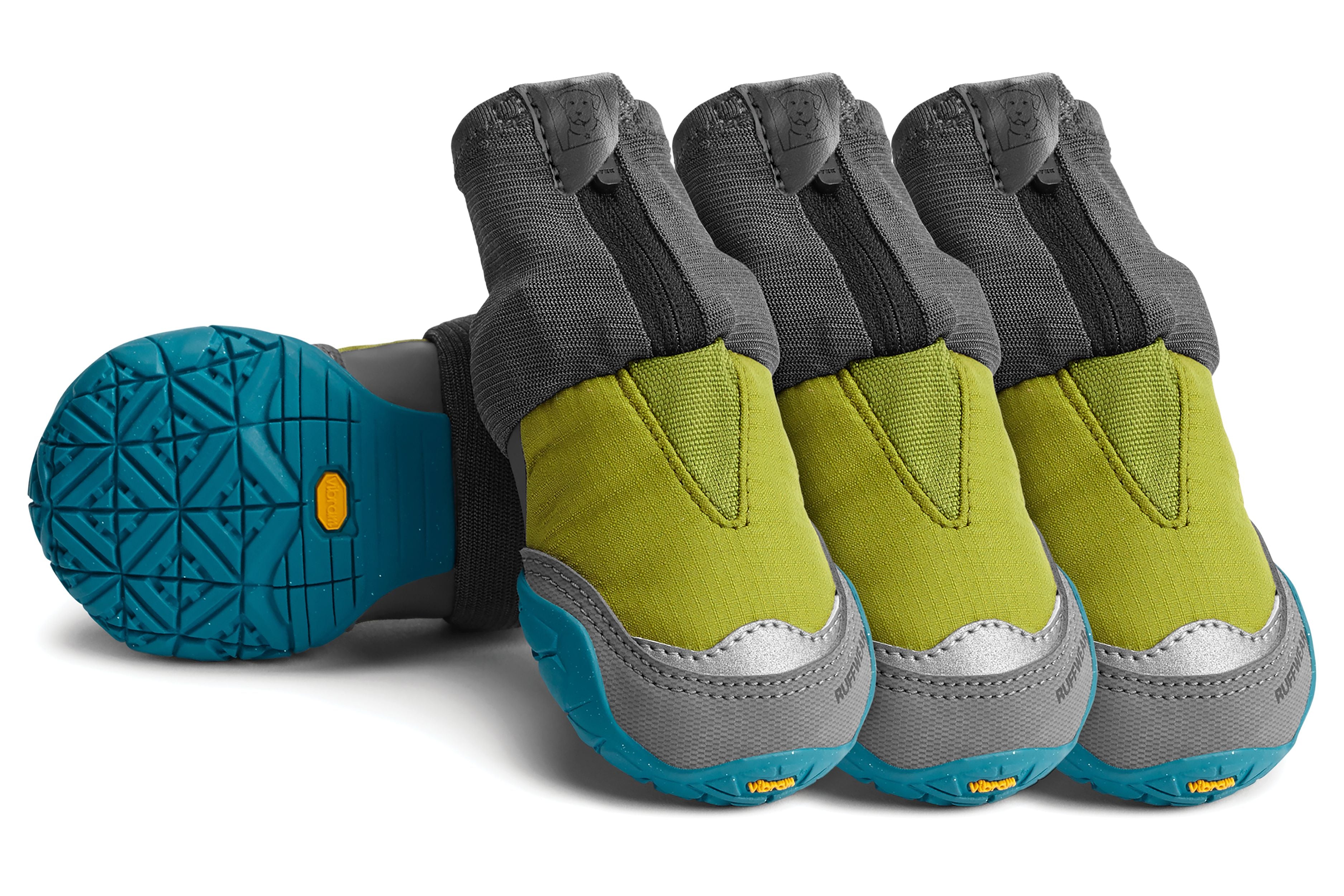
Surface can have a real effect, especially on rocky or tricky terrain (or thick, clay-like mud, as you get on Salisbury Plain, which cakes on the feet and legs). Check how your dog is walking. If they seem uncomfortable and are pulling to the side or trying to walk on the edge of the path, they may be finding the footing difficult with a fully weighted pack. Try lightening the weight, walking them on the softest surface available, or booting them. If you find your dog licking their pads the day after a backpacking trip, you'll definitely want to consider these options.
How Much Weight
If you find your dog suddenly loses interest mid-walk, or isn't excited about getting their pack on, you may have simply increased the weight a little faster than they were ready for. You can always drop back to a lighter weight for a few hikes to see if they are more comfortable – it may just be that they need to build up those muscles a little more.
Temperature
Just like wearing a rucksack, carrying a backpack will add to whatever temperature your dog would normally experience on a hike – especially for thick or long-coated dogs, or dogs that are a little less fit. If you are just starting out, err on the cooler side (under 10°C) until your dog begins to gain fitness and you learn how much they can comfortably carry in different temperatures.
If you notice them slowing down, it may also be that they are getting warmer than you realise. Most packs don't have the best ventilation, so their backs will be warming up. Take the pack off fully during breaks to check their temperature and make sure they aren't overheating. Offer water at every break and gauge how much they are drinking compared to a normal outing. This is something you will learn and tweak as you go – but do keep it in mind at all times, and definitely do not take a dog unused to backpacking out on a really warm day. For our breed it is recommended to work under 15°C – and we try to keep it under 10°C. For our dogs, the colder the better!
Keep It Fun!
I have special treats my dogs only get when we stop on breaks during backpacking trips. They get so excited when they know we're stopping and they're going to get their smoked sausage and a share of my ham sandwich! I have backpacked my younger girl Nevada on the same trail a number of times because we absolutely love it, and we always stop at the same spot for lunch. On our last outing I decided to try a different spot – and she adamantly refused! She knew exactly when and where she would be getting her smoked sausage, and she hiked us right to the spot and stopped. Needless to say, we had our lunch break there as usual.


